

In case you haven’t heard, mahjong is having a moment. The Americanized version (with Jewish roots) of the Chinese tile game is trending, but the original game has similarly been entertaining groups for centuries prior.
As a Chinese and Jewish kid, I grew up learning the original Chinese version, the rules of which are a little like gin rummy. The most basic objective is to draw tiles to try and get pungs (sets of three of a kind) or chows (three consecutive-numbered tiles in the same suit), as well as a pair of identical tiles known as the “eyes” of your winning hand. The American version differs both in the necessary tiles (their sets include Jokers, for example) and in the rules and accepted standard hands, which change annually according to the cards distributed by the National Mahjongg League.
Playing mahjong with my parents, brother, grandparents, cousins, aunts, uncles and friends has gotten me through everything from holiday evenings to power outages where we played by flashlight. This four-player game, no matter which version you learn, is great for families, friend groups and anyone who likes to collect tabletop games. It’s a conversation starter and good for kids and adults to play together.
If you’ve been hearing about mahjong and want to give it a go at your next game night, keep reading to discover a few beginner-friendly sets, as well as the benefits of learning to play.
A classic Chinese mahjong set
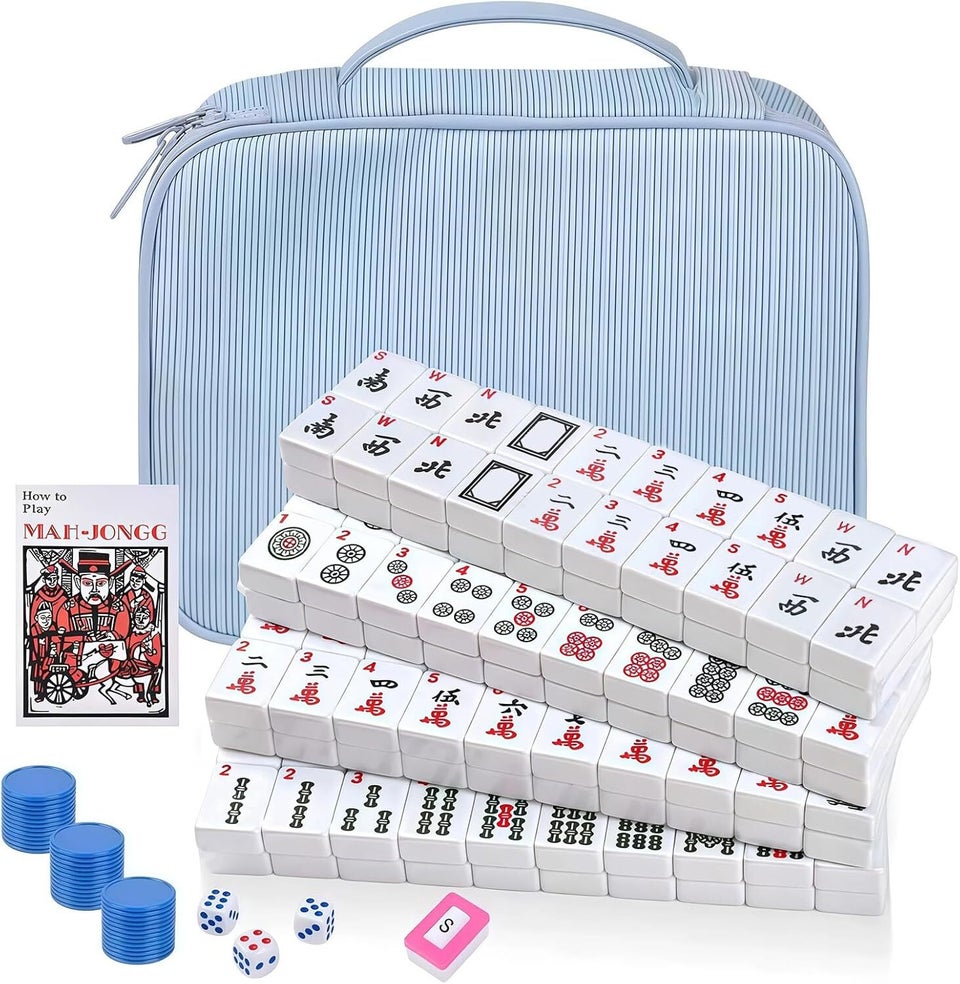
This classic Chinese set has Arabic numerals and English letters on all of the tiles to make it easy for those who don’t know the Chinese characters or suits yet, and looks nearly identical to the tiles I’ve been playing with since I was a child. It comes with 144 tiles along with the necessary three dice, chips, a wind indicator and even an English instruction booklet.
It does lack the annual rule cards and Joker tiles associated with the American version of the game, but I find the unchanging rules of the Chinese version a little more beginner-friendly, not to mention less confusing when we pull the game out to play a few rounds no matter the year.
Amazon
Or an American set with many of the same features
American mahjong sets include a few more tiles, like Jokers and seasons (if you want, you can also buy an American set and use it to play the Chinese version later by just setting the extra tiles aside). I tend to scrutinize American sets before recommending them for two things: that they aren’t exorbitant in price, and that they honor the game’s Chinese roots by including the Chinese characters and symbols that are intrinsic to the game (this has been a source of controversy before).
This set checks both boxes. It also comes in a convenient softsided carrying case for portability; the tiles are smaller than traditional Chinese tiles, as is customary for American sets. The set includes many of the features of the Chinese set, like the dice, wind indicator, instruction booklet and chips. The chips here appear to all be one color — in the Chinese set, they’re different colors to signify different amounts of points or money, whatever you’re playing for.
Etsy
A splurgier but more travel-friendly American set
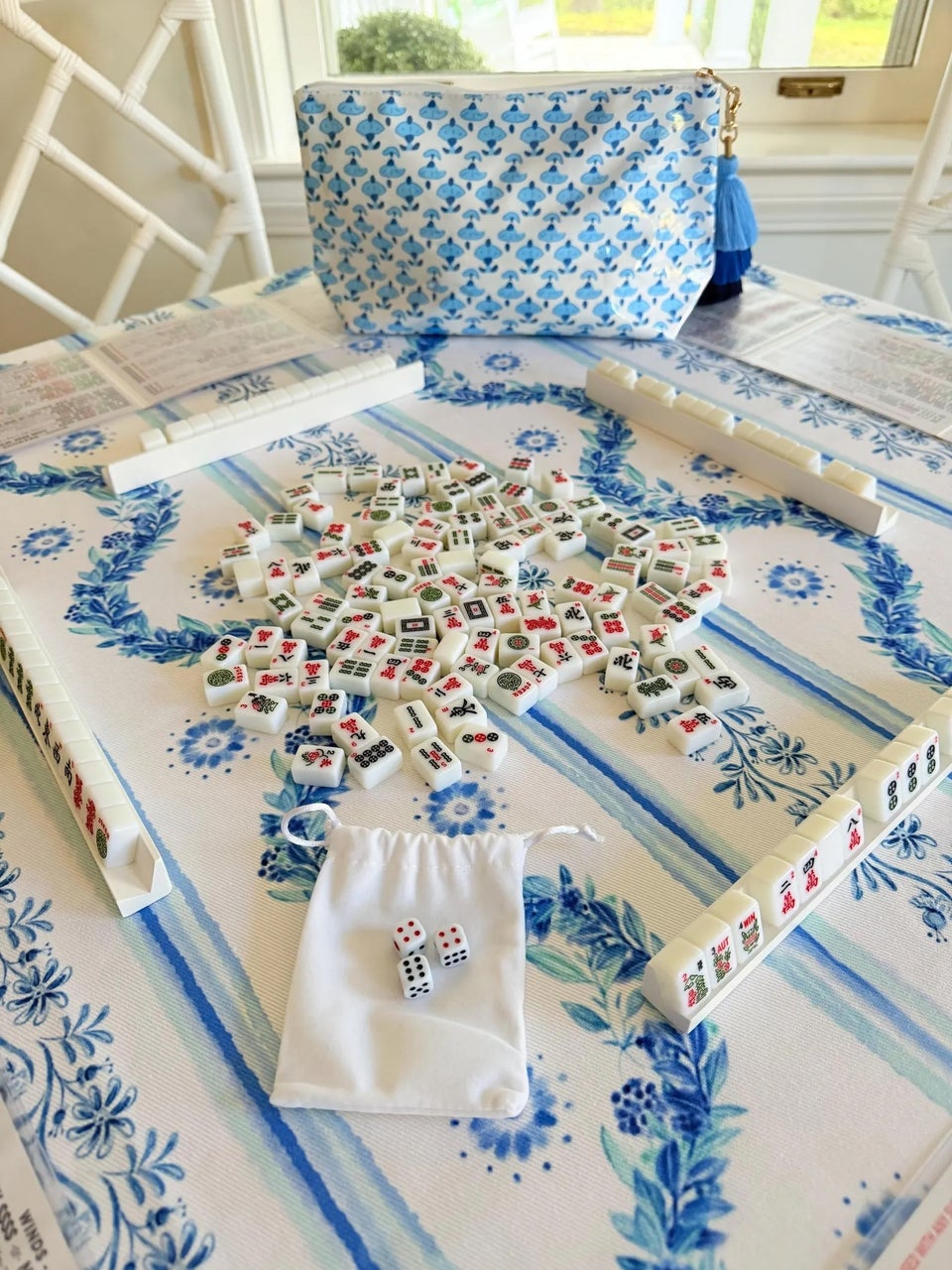
A traditional mahjong set is a little hefty to carry around, like a mini-briefcase, so if you really want something you can take on the go, you might want to invest in a set designed for travel. This set, made by TheMerryMahjongCo, has even smaller tiles, making the 166-tile set weigh only 2.13 pounds. You can much more easily toss that in a suitcase. The set includes all the needed American tiles, as well as three dice and four racks, which are often used in American mahjong to hold the thinner tiles. The whole thing comes in a tasseled waterproof travel bag.
(One important note: This set, like all the other American sets on this list, does not come with the National Mahjongg League’s annual rules card, which you’ll have to purchase separately directly from their site — if you see one on Amazon, it’s likely a counterfeit. The rules and standard hands in American play change each year, unlike the Chinese version, which is always the same.)
Amazon
Or some truly bare bones mahjong playing cards
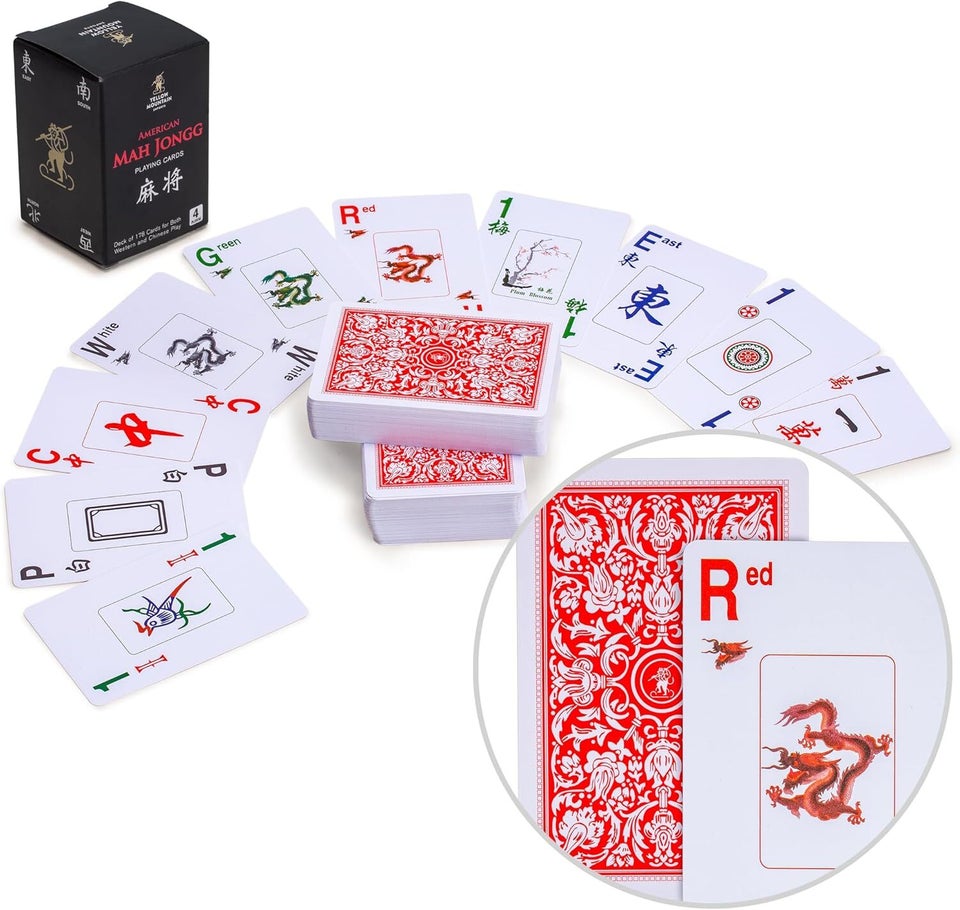
Now, this isn’t traditional, and I believe you’ll lose some of the beauty of playing mahjong by opting for a card version rather than the tiles (the sound of “washing the tiles” — aka shuffling them — before each game is music to my ears). However, I can’t deny that many mahjong sets can be expensive, and if you’re not sure that you’ll love the game, a version that uses cards instead of tiles can be a much cheaper way to test it out. You can always commit to a proper set later, and besides, it doesn’t get much more portable than this.
This 178-card set can be used to play either American or Chinese mahjong. It lacks extras like dice and chips, and also doesn’t include instructions, so you may have to do a little research on your own, but it can help familiarize you with the different tiles and types of hands.
What are the benefits of playing mahjong?
As it turns out, mahjong is good for more than just a bit of fun: It can have a positive impact on your brain, too. Playing mahjong been found to improve the executive function of elderly people with mild cognitive impairment, and a higher frequency of playing can help with cognitive function in areas like reaction and self-coordination. It can also increase social interactions because of the four-player nature of the game, and can be used as a problem-solving game to form new neural pathways in the brain, which can help fight dementia.
On a personal note, mahjong has been a great way for me to connect with multiple generations of my family, as well as introduce other loved ones to my culture. It’s such a treat to gather around the table, everyone away from their phones, for one “wind” (round) of the game. We marvel at each other’s luck and strategy, engage in some light trash talk and generally savor the time spent together. Playing mahjong has been a treasured pastime of mine for years, and this is one trend I hope sticks around for good.
Be the first to comment