

Delroy Lindo can’t help but be sincere.
That quality has carried through every role the esteemed actor, 73, has taken on across his decades-long career, one marked by tour-de-force performances steeped in raw expression and lived-in experience. Call it a symptom of his thespian roots, or a testament to his deep respect for the craft — either way, Lindo has never been one to fake the funk.
You can see it in some of his most defining parts: Harlem gangster and numbers runner West Indian Archie in “Malcolm X”; struggling jazz musician and patriarch Woody in “Crooklyn”; the deeply flawed and troubled fruit picker Mr. Rose in “The Cider House Rules”; and attorney Adrian Boseman in “The Good Fight,” just to name a few. Plus, his latest and widely celebrated turn in “Sinners,” playing elder bluesman legend Delta Slim.
I’m reminded just how genuine Lindo is in real life, too, on this Wednesday afternoon we speak, as the actor insists on telling me the reason for his distant mood at the top of our interview. Just hours earlier, nominations for SAG’s 32nd Actor Awards (formerly the Screen Actors Guild Awards) were announced, and, apparently, a studio executive called to inform Lindo that “Sinners” landed several nods — five total, including ones for the ensemble cast, Michael B. Jordan, Wunmi Mosaku and breakout star Miles Caton — yet nothing for him alone, despite Lindo’s performance drumming up considerable buzz this awards season. He doesn’t harp on the news, nor wallow in his slight disappointment, but he does acknowledge the snub.
“It’s kind of like the 300-pound gorilla in the room,” Lindo told HuffPost. “You gotta just face it and say, ‘Yeah, I’m aware,’ and move on.”
Lindo’s been here before. By here, I mean the actor appears to be right on the verge of finally getting his industry recognition, and audiences have been right there rooting for him, hoping that Hollywood will finally recognize the talent that’s been in front of them all along.
That feeling was especially palpable five years ago, when many thought an Oscar nomination would come of Lindo’s acclaimed performance as a troubled Vietnam veteran in longtime collaborator Spike Lee’s war drama “Da 5 Bloods,” which, after nearly 50 years, would’ve been a career first for the actor.
Unfortunately, the nod never came.
Lee himself called out the snub on social media with a “Delroy Lindo appreciation post,” noting that the lack of nominations “does not take away from the impact of his work.”
It’s a sentiment Lindo has tried to keep top of mind in moments like this. And judging by the continued outpouring of praise for his “Sinners” performance —along with audiences all but demanding more attention for it— he doesn’t have to look very far to see the reach of his work. That alone, he said, has been “profoundly affirming.”
“There is a distinct difference between whether one is officially recognized with an award or not, compared to how the work impacts audiences and how it impacts other human beings,” Lindo told me. “I value that and I always will, no matter what.”
Ahead, Lindo gets candid about everything he’s experienced on his “Sinners” ride, from what got him hooked on the script from the get-go, to fighting for his character’s arc, to his now-iconic car monologue, to what he admires most about Ryan Coogler’s “mind-blowing” success.
Do you ever think about previous characters you’ve portrayed and the impact they’ve had on audiences? Like, what those characters mean to people?
I do. I mean, usually, I’m contemplating those things in the context of a conversation that I’m having with somebody, whether it be a journalist or another audience member speaking to me about how something that I have done has impacted them. It’s hard for me to articulate that, on so many levels, because it is a visceral, emotional phenomenon. It makes me feel a certain way. So I can say, “Thank you,” but internally, I am filled with gratitude. I’m filled with a range of emotions that affirm, for me, the humanity of what I do. But also the human connection that’s made between what I’m doing and how it’s being received, and that’s huge. It’s gargantuan. I don’t have the words to adequately describe how that makes me feel, but trust, it makes me feel good.
Is that how you’ve been feeling these past couple of months, with all the “Sinners” chatter and people saying they loved you in the movie?
Yes, I mean, there’s a lot of that. And look, I would be remiss, and it would be slightly … no, not slightly — it would be inauthentic of me if I did not tell you that right before I started doing this interview, I got word from somebody, a colleague at the studio, who said “Sinners” has been nominated for some awards, but I personally have not been. And so, to be honest with you, I am filtering my feelings, as we speak right now, through that lens. However, and this is really, really, really important for me to communicate to you. There is a distinct difference between whether one is officially recognized with an award or not, compared to how the work impacts audiences and how it impacts other human beings. I value that and I always will, no matter what.
And to your question before, yeah, I add Delta Slim to that list, from the standpoint of how his existence, my existence as Delta Slim, has impacted people. It’s been, and continues to be, very significant, and it means the world. It means everything. It’s interesting, because what would I… How would I be? What would my stance be had you not said what you said? What would my stance be if the various people who have articulated to me what the work has meant? What would I be in the absence of those comments? I’m not sure, but I would still have to trust that I’m on the right path. I would still have to trust that God has put me on the right path. And I want to believe that that would be the case no matter what. But I’ll tell you this, audiences such as yourself affirming me in those ways make the journey that much easier.
This isn’t the first time you’ve been snubbed for an award outside of this “Sinners” run; I’m thinking of “Da 5 Bloods” here. Did that snub teach you not to get your hopes up and put too much stock in awards recognition?
The short answer is yes. Look, a really wise person said, “Film is forever. It speaks on its own terms.” And so, I’ll just leave it at that.
How does it feel to be part of something that’s become such a phenomenon, not just in the film world, but culturally, too?
It’s a cultural phenomenon. It’s a cultural moment. And it feels … really special. It’s one of those situations where what makes it more special is that I didn’t see it coming. I wasn’t sure how the film would be responded to. I knew that it was a singular and special piece of material, but I was hoping that audiences would not be disappointed that it wasn’t “Black Panther 3.” And I’m not being facetious. I mean, completely different kind of material, obviously, but I was hoping that Ryan’s fans and even Michael B’s fans would not be disappointed [and say], “Oh, man, I wanted something more along the lines of ‘Black Panther.’”
What’s been particularly rewarding is that, hands down, from top to bottom, this film has been accepted very much in its own terms, embraced on its own terms, lauded on its own terms, and has sort of transcended itself to become this cultural phenomenon. And that feels pretty amazing to be a part of.
Music, of course, plays such a central part in “Sinners,” and is also how you first heard about the movie, with Ryan texting you and asking if you play the piano.
What was his initial pitch of the movie to you?
He didn’t pitch it. He just sent me the script, and I read it.
Yeah. He sent me the full script, and I read it. And the things that I recognized, the things that I thought I was seeing in the material, I emailed him back, and I said, “This is what I’m seeing. Am I right about this?” And he emailed back and said, “Absolutely.” It was pretty much that straightforward.
And you’re talking about the deeper messages in the script, yes?
That’s right. From the very beginning, I acknowledged that this is a very contemporary story. Part of the genius of this story, as far as I’m concerned, is that it has all these very contemporary themes having to do with what happens when community gets infiltrated, violated.
When I spoke to Ryan, I told him that “Sinners” is a period piece, but the story’s message very well applies to today, too.
No question. That was one of the main components that I identified right off the bat. And I have to say to him, “Look, is what I’m seeing? What I’m reading, is it accurate?” And he said, yes.
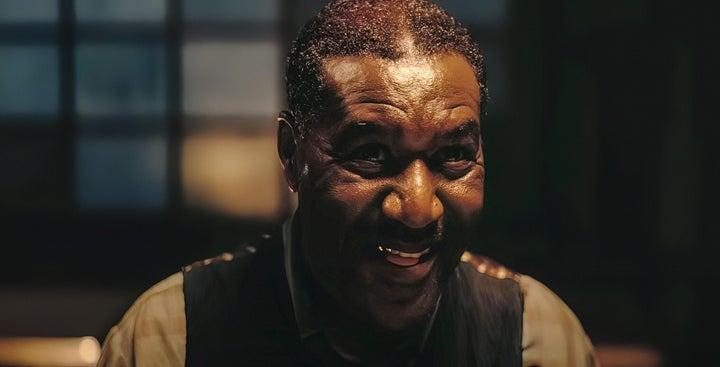
©Warner Bros/ Everett Collection
I’ve heard that among a lot of the “Sinners” cast. The fact that the script caught your guys’ attention immediately and had you so engaged and excited, before read-throughs, before shooting even started.
Sure, sure. You know, the first “Black Panther” was a cultural moment too. I mean, hands down. So one knows from the inception that one is working with a filmmaker, a really important filmmaker, a really important storyteller. A storyteller committed to presenting us in all of our humanity and complexity, and that’s profound. But it also resonates for me because personally — and I said this during the press run of “Da 5 Bloods” — the rejection of our humanity (when I say our, I’m talking about African descendants) is the source of all the problems. That’s the beginning, middle and end of the problems right there. Historically, our humanity has been denied.
So, what’s interesting with Ryan is that it’s not like he’s standing on a soapbox with his fist in the air. He’s telling a human story, not proselytizing to anybody. He’s telling a story about who we are and showing this community in response to being what I call “infiltrated.” So, humanity, humanity, humanity. That’s always the job. Who is this in any piece of work that one is doing? Where is the human being inside here? And how do I work on this in such a way that I can present that? It’s always about finding the humanity.
To that point, where did you start with Delta Slim and finding his humanity? Or was most of it already laid out on the pages for you?
Much of it was laid out on the page. There was a key clue with Delta in the monologue in the car, which, for me, explained why I’m self-medicating — what the liquor represents. Then, in articulating that story [about Delta’s buddy, Rice, getting lynched] to Stack and Preacher Boy, I then had the opportunity, as created by Ryan, to explain part of my origin story and, hopefully, explain to the audience what the basis of my self-medicating is.
“Sinners” seemed to challenge everyone in the cast in some way in preparing for their characters. Miles learned to play the guitar in two months; Wunmi did a deep dive on hoodoo; Michael had to figure out how to portray two different men. Beyond researching the blues and blues musicians, what was your challenge for Delta Slim?
I didn’t think of it as a challenge. Well, there was a challenge. One of the things I discussed with Ryan originally was how to have me not disappear in the second act. You’ve probably heard at this point—
I was going to bring that up next.
Yeah, there was such a dynamic introduction to Delta Slim in the story. I said to Ryan, “I fall off in the second act. Is there a way we can maintain or beef up my presence?” And he said, “Yes, we’ll work on it,” and we did. That was a challenge as much as how are we going to do this? But it wasn’t from the standpoint that I trusted we would find ways of doing this. I believed when Ryan said, no, we’ll work on that. And where I end up making the ultimate sacrifice, which audiences have perceived as very heroic, it’s the sacrificing of myself so that Preacher Boy survived, the culture survived, the music survived, which is a larger set of dynamics associated with my presenting myself to the vampires for supper [laughs]. But that was not in the script originally.
So we arrived at that place, and it’s a wonderful … I’m not sure wonderful is the word. It’s a nice completion of my narrative arc. You see me at the beginning as one kind of human being, and at the end of the film, I’m somebody different. But to your question, there was the challenge of playing the piano and the harmonica convincingly, or in a way that the audience believed. There were those technical challenges. I guess, as with anything that one does, you hope that when you’ve done all of this work, you come up with a character that, A, is compelling, and B, supports the narrative that the storyteller wants to tell in a way that is engaging for the audience. But I kind of didn’t think of it as challenging. I thought of it as, OK, this is the work. This is what I have to do.
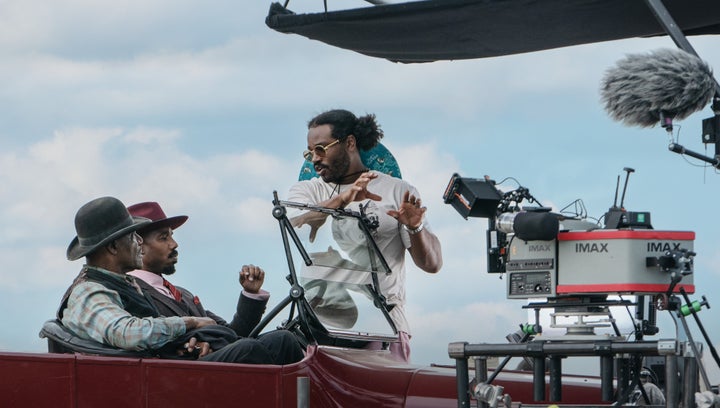
That’s a good perspective. Also, the fact that you were able to work with Ryan and that he was open to your suggestion to make sure Delta Slim didn’t disappear in that second act speaks to him as a director and to how much he respects the people he works with.
It’s generosity. It’s a combination of being generous, being smart enough and self-aware enough to know what’s missing from his own story, from what he’s written, and what he could and should do in order to address that.
Absolutely. Now, since you brought up the car scene earlier, we might as well unpack it, since that’s also a scene people are still talking about. Do you remember what was going through your mind as you guys were filming that?
Doing the work, remembering the lines. I mean, I’m not being facetious. Tracking the story in a way that modulates and hitting the notes with the right emphasis that need to be hit. Because this was a three-page monologue, so you can’t give every single sentence and every single word the same value. You have to decide, OK, this part of the monologue is more important, and I need to get through these words so I can get to this part. And then once I’ve done that, I continue talking because I’ve got another two pages to talk, and then I’ve got to get to the next mountaintop and then the next mountaintop.
So it’s a question of modulating and deconstructing the monologue in a way that it’s, hopefully, emotionally and narratively dynamic, so that audiences will stay with you on the journey. That’s what was going through my head. Making sure that what I was saying and how I was saying it was engaging to the two gentlemen in the car with me and, by extension, the audience.
Then once that’s all done, that’s where the improv comes in.
Yeah, and that was not planned. That was entirely organic to the moment and where I ended up, how I ended up feeling as a result of everything that had preceded it. And my co-stars, God bless them, were right there with me. We were all in it together at that point.
I appreciated how you gave Ryan and Michael their flowers during your speech at the Critics Choice Awards. As a veteran, it takes a lot of humility to give them that spotlight in that moment, and you also made sure the room recognized them. What about their partnership inspires you personally?
Well, as I said, it’s very, very dynamic and only time will tell [what happens next]. It’s sort of mind-blowing when you take a half a step back, and you look at the first “Black Panther.” As I am thinking about it, I think about Chadwick Boseman. Not only Chadwick, but all of these really dynamic Black people who are in this, who are being presented. And then [Coogler] does it again, elevating, presenting these Black people, these African people, African descendants, giving them platforms from which to express. “Black Panther,” “Black Panther 2,” “Creed,” “Fruitvale [Station],” my God — I live in the Bay Area, so I’m very aware of what Oscar Grant’s murder represented, not just as an event, but how it impacted this community. So you get [those movies] and “Sinners.” Each of those achievements are monumental in their own right. Then, when you look at Michael B and Ryan working together as co-artists, being part of presenting this work to audiences across the world, it’s not just an American phenomenon. These are global phenomena.
Acknowledging that, recognizing that, it’s mind-blowing, particularly as young men too. None of us knows what the future holds. Is it a paradigm shift? I do not know. I hope it is. I’ll tell you what, on their own terms, they’re extraordinary achievements. And the fact that Michael B and Ryan have been part of presenting these narratives, these incredibly successful phenomena, critically and commercially. Who does that? The answer is these two brothers have done it. And I can only surmise at the impact, not only on audiences but on younger people coming up who were looking at that.
This interview has been edited and condensed for clarity.
Be the first to comment